Plain-English AI from a real person.
Practical AI from 31 years in IT · Issue 03 · Week of November 1, 2026
Some AI tools now do chores, not just answer questions. One example is Grok Bot, which xAI, now part of SpaceX, released as a public beta on August 11, 2026. The company calls its bots "AI teammates" that sign in to the apps you already use, finish jobs on their own and "only come back when something needs your approval." It runs on desktop computers, iPhones and Android phones. It launched on top-tier paid plans, and later in August the company added more plans and a free trial with limited usage. As of October 29, 2026, new customers get it with the Premium, Super and Ultra plans of The X Subscription, where it shares one weekly usage allowance with Cursor and the Grok apps. The cheaper Plus plan and the free plan don't include it.
The company's use-cases page lists 56 jobs, from clearing out old subscriptions to sorting your inbox and comparing flights. The good ones pause before anything final. The subscription helper "unsubscribes what you approve." The inbox helper says "every send stays behind your approval." The travel helper "confirms before booking."
That's the rule I'd give any reader. Let AI do the busywork, but don't let it send, buy or book anything without checking with you first.
Start small. Give each bot one clear job and tell it where to stop. Ask it to draft first and show you before it does anything final. Then add a rule that it must ask before it sends, buys or books. As of October 28, 2026, xAI's own help pages say you set those limits yourself. If you set up a routine, space it out. The company warns that frequent checks can use up a week of usage in a day.
Full disclosure: I use Grok Bot myself to help put this newsletter together.
Sources: xAI, “Introducing Grok Bot” (August 11, 2026); Grok Bot (@bot) on X (August 11, 2026); Grok (@grok) on X (August 11, 2026); Grok Bot (@bot) on X (August 21, 2026); xAI, “Grok Bot is now included with more plans” (August 26, 2026); xAI, Grok Bot use cases (checked October 26, 2026); Cursor forum, “Introducing Grok Bot” (August 11, 2026); The Verge (August 12, 2026); VentureBeat (August 11, 2026); xAI, “xAI joins SpaceX” (February 2, 2026); xAI Grok Bot docs: Bots (checked October 28, 2026); xAI Grok Bot docs: Approvals, security and privacy (checked October 28, 2026); xAI Grok Bot docs: Skills, routines and automations (checked October 28, 2026); xAI Grok Bot docs: FAQ (checked October 29, 2026); xAI, “Introducing The X Subscription” (October 12, 2026); xAI, “Pricing: Compare Plans” (checked October 29, 2026)
One caution before you sign up: on Sunday, November 1, many Grok Bot users, me included, saw their usage jump even though their bots were sitting idle. Mine went from about 30 percent to 75 percent of my weekly allowance. A jump like that can lock you out until it resets or push you into paying extra.
The company's status page lists a "service degradation" affecting its billing and usage dashboard from about 12:40 a.m. to 5:50 a.m. Eastern that Sunday, now marked resolved. So far the only explanation has come from a bot. The @grok account on X said the problem caused "inaccurate readings even with idle bots" and that real usage wasn't affected. Its advice was to force-quit the app and reopen it. That didn't fix it for me. I filed a support request in the app around 9 a.m. Sunday. After several emails back and forth with the company's AI support agent, I asked to talk to a person. The agent said it "may take 3-4 days for a human to get eyes on this ticket."
Update, Monday morning: Overnight my usage dropped from 88 percent back to 44 percent, and many other users on X report similar drops, though not all. As of this writing the company hasn't explained it.
What this means for you: If you pay for an AI tool by how much you use it, screenshot your usage page now and then. If the tool lets you set a cap on extra charges, set one. And if the only help you can get is the company's own chatbot, keep asking for a person.
Sources: Grok (@grok) on X, reply (November 1, 2026); SpaceXSI Status, “Service Degradation - Billing and Usage Dashboard” (November 1, 2026)
On October 21, 2026, the team that maintains PHP released emergency fixes for two flaws. PHP is programming software that runs roughly 70 percent of websites, according to Cybersecurity Dive. The flaws could let an attacker take control of a website's server without a password.
Amazon reported that someone probed its test systems for the flaw on October 17, four days before the fix was public. Researchers reported the first confirmed working attacks on October 24. On October 26 the Cybersecurity and Infrastructure Security Agency, the federal cyber agency known as CISA, added both flaws to its list of problems known to be under attack.
The repair belongs to website owners. You can't patch a site you visit.
What this means for you: Install updates on your phone, computer and browser, use a different password at every site and turn on two-step sign-in.
Sources: PHP project advisory (October 21, 2026); PHP 8.3.36 release announcement (October 21, 2026); Amazon Web Services Security Blog (October 21, 2026); CISA alert (October 21, 2026; revised October 26, 2026); SecurityWeek (October 27, 2026); Cybersecurity Dive (October 27, 2026); Cybersecurity Dive (October 21, 2026); CISA, Secure Our World; CISA, Secure Our World: update software
Axios reported on October 22, 2026, citing unnamed sources, that major U.S. banks are finding AI agents inside customer accounts. An AI agent is a program that carries out tasks for you, such as logging in and clicking around.
In most cases the customer had handed over a username and password. That breaks the rules at most banks, which require a person to log in. Some banks also saw agents phone call centers or act on their own. One executive said the bank can't always tell an approved agent from one that has gone rogue.
Morgan Stanley is blocking outside agents, according to Axios. JPMorgan, Bank of America and Citi are restricting them. Morgan Stanley said it hasn't seen "rogue AI agents accessing our platforms." Axios described no stolen money.
What this means for you: Never give your bank password to an AI assistant or anyone else. Chase says the same.
Source: Axios (October 22, 2026)
Google's own privacy page says human reviewers, including outside contractors, read a sample of Gemini chats. Google detaches them from your account first but keeps reviewed chats for up to three years. Deleting your activity doesn't erase them.
ChatGPT's risk is closer to home: your sidebar can show chat titles when you share your screen. On October 20, 2026, OpenAI began rolling out locked chats, which hide a conversation from your history and search behind a PIN. OpenAI says locking doesn't change how long it keeps the chat or your model-training setting.
What this means for you: Keep Social Security numbers, passwords and medical details out of any chatbot. In Gemini, turn off Keep Activity or use a temporary chat. In ChatGPT, lock a chat before you share your screen. It hides the chat. It doesn't make it private.
Sources: Google, Gemini Apps Privacy Hub; OpenAI, ChatGPT release notes (October 20, 2026); OpenAI, Using locked chats in ChatGPT; OpenAI, Data controls in ChatGPT
The Department of Homeland Security has ordered federal civilian agencies to stop buying products from DeepSeek, the Chinese AI company, and to remove them from government systems. The Federal Register published the notice on October 20, 2026. It also covers outside products built on DeepSeek technology. BleepingComputer says DHS cited fears that Chinese authorities could reach user data.
The order covers government purchases and computers. It says nothing about what you do at home.
What this means for you: Nothing changes by law. If you use DeepSeek or an app built on it, ask what you'd ask of any chatbot: where does my data go? Keep sensitive details out.
Sources: Federal Register, DHS notice (October 20, 2026); BleepingComputer (October 20, 2026)
Last week OpenAI released GPT-6.1 Terra, a cheaper model for paid ChatGPT plans, and Google announced Genie 4 (interactive worlds with sound) on October 27 and Gemini 4 Carbon (which Google says ranks first on one industry index) on October 28, though both remain limited to select testers for now.
Sources: OpenAI, GPT-6.1 Terra; Google DeepMind, Genie 4 (October 27, 2026); Google, Gemini 4 Carbon (October 28, 2026)
Last week I suggested describing your own Pac-Man or Space Invaders to an AI coding assistant and seeing what it builds. So I did. I asked Grok Build, the assistant I use for hobby coding, for a small game. Here's how the conversation went:
Me: "Build me a small sample Pac-Man or Space Invaders game, your choice. Start off very simple."
Grok Build: Done. It's called Lane Raid, and it has one wave of invaders. Use the left and right arrow keys to move and the space bar to fire.
Me: "OK, now make it a bit more complex, but keep the current version as well."
Grok Build: Done. The game now has a second wave and a flying saucer that sweeps across the screen. I saved the simple version too.
Me: "Will Space Invaders work on a phone?"
Grok Build: Right now it uses the arrow keys. I can add on-screen buttons you tap with your thumbs to move and fire.
Me: "Yes, add the on-screen controls."
Grok Build: Done. The buttons are in, and the game now works on phones.
The result is Lane Raid, a small Space Invaders-style game. You shoot descending invaders across two waves, hide behind bunkers and try to hit the saucer that flies past. On a computer, use the arrow keys and space bar. On a phone, tap the on-screen Left, Fire and Right buttons.
You can play it free right now at https://imnothal.com/play/lane-raid/
It's a simple game, and it took a few back-and-forths. But it's my own version of a classic, and I started with four plain requests. Pick a game, a tracker or a gadget you wish existed, describe it in everyday words and see what comes back. If the first try isn't right, say what to change.
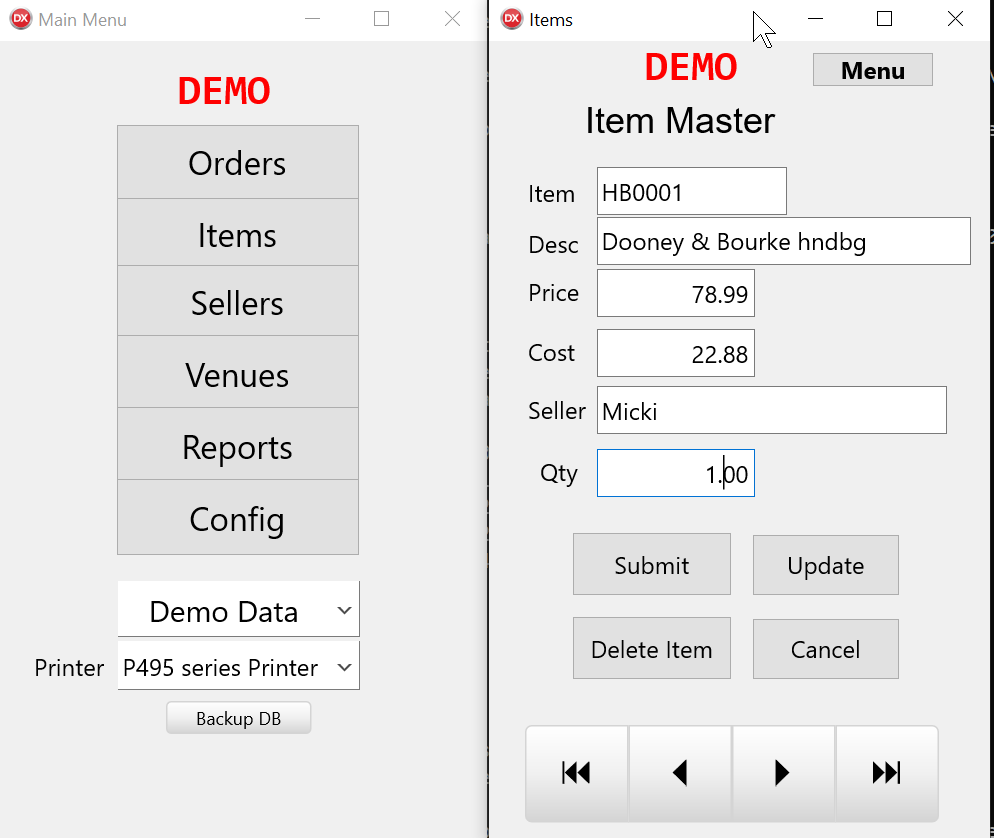
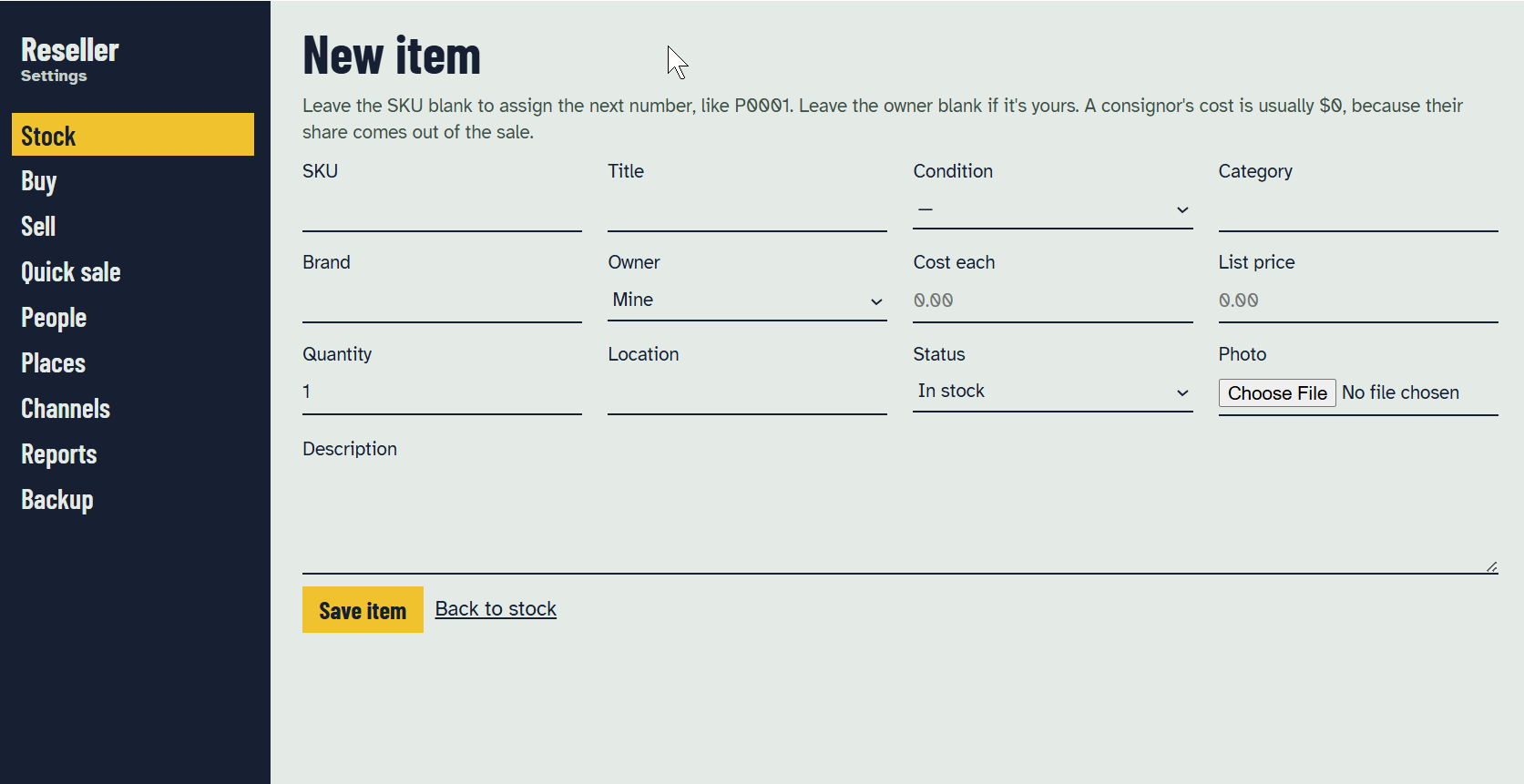
Want to go bigger? The game took four requests. My Reseller app took several sessions. Back in 2019 I wrote a Delphi program to run a yard sale where several people sold their things. This month Grok Build read my old Delphi code, wrote up a plan for a new version and then built it. The plan listed what the first version had to do: track stock and what I paid for it, record sales and fees, run a quick checkout at in-person sales, keep track of what I owe people who sell through me on consignment and show profit by month. Same tool as the game, just a bigger job.
Written by Paul O'Brien, a former junior high English teacher with 31 years in IT. More about me at imnothal.com.
Know someone who’d like plain talk about AI? Send them this page. They can sign up free at imnothal.com.
Sources checked November 2, 2026.